
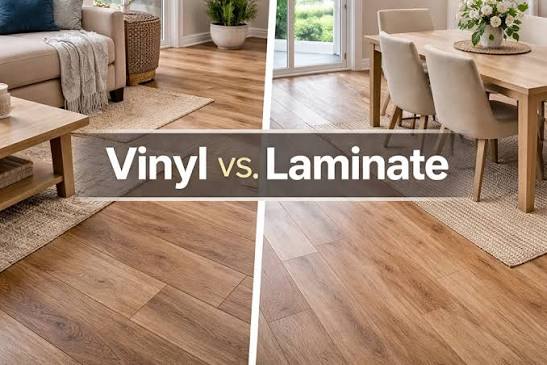
Stand in any flooring aisle and you’ll notice something frustrating: vinyl plank and laminate look almost identical. Both mimic wood. Both click together. Both come in dozens of tones from pale oak to dark walnut. So how do you pick?
The truth is that they behave very differently once they’re in your home. Let’s break down the differences so you can choose with confidence.
What exactly are they?
Luxury vinyl plank (LVP) is made from layers of PVC plastic, a printed image layer and a clear protective wear layer. It’s flexible and, in most cases, fully waterproof.
Laminate has a core of compressed wood fiber (high-density fiberboard) topped with a photographic layer and a hard protective coating. It’s stiffer and feels more like real wood, but the core can swell when it gets wet.
Water resistance
This is the big one. LVP is built from plastic, so spills, humidity and even flooding don’t ruin the planks. That’s why it’s popular in bathrooms, basements, laundry rooms and kitchens.
Laminate has become more moisture-resistant over the years, and some products are labeled water-resistant. But the wood-based core can swell and warp if water sits on it or seeps into seams. For spaces with regular moisture, LVP is the safer choice.
Durability and scratches
Laminate usually has a harder surface that resists scratches and dents from furniture and pet claws. LVP is softer, so heavy items or sharp objects can leave dents or scuffs over time. That said, a thicker wear layer, often measured in mils, improves resistance. Look for 12 mil or higher for busy households.
Comfort and sound
LVP tends to feel a little softer and warmer underfoot. Laminate can feel firmer and sometimes sounds hollow when you walk on it, although a good underlayment solves most of that. If you live in an apartment or have neighbors below, ask about sound ratings and check building rules, because many condo associations require specific underlayments.
Appearance
Both can look surprisingly realistic. Laminate often has a more convincing wood feel thanks to embossed textures, while premium LVP can look equally real with deep grain patterns. The best advice? Bring samples home. Look at them in morning light and evening light, next to your walls and furniture.
Cost
Prices overlap, but generally:
- Laminate is often a bit cheaper per square foot for basic options.
- LVP can cost more for premium lines, but you may save on installation in wet areas because you won’t need extensive moisture protection.
Budget for underlayment, trim, transitions and removal of old flooring. These extras can add up.
Installation
Both are available in click-lock formats that float over a subfloor. That makes DIY realistic for many homeowners. LVP is more forgiving on slightly uneven floors, while laminate needs a flatter surface. Remember to leave a small expansion gap around the edges for both.
Lifespan and resale
Well-installed laminate can last 15 to 25 years, and quality LVP often lasts a similar span or more with proper care. Neither adds the resale boost of real hardwood, but both are popular with buyers, especially in kitchens and bathrooms.
Which one should you choose?
Go with vinyl plank if:
- You want worry-free water resistance
- You’re flooring a kitchen, bathroom, basement or laundry room
- You have kids or pets that cause frequent spills
Go with laminate if:
- You want a firmer, more wood-like feel in dry rooms
- You need strong scratch resistance
- You’re working with a tight budget in living rooms or bedrooms
One more tip
If you rent or share a building, check your lease or association rules before installing anything. Some require approval for flooring changes.
The bottom line
There’s no universal winner. For wet areas, LVP wins. For dry rooms where scratches are the main worry, laminate shines. Pick based on how you actually live, not just on how the sample looks in the store.