
It’s 2 a.m., you’re sneaking to the kitchen for a snack, and every step sounds like a haunted house sound effect. Squeaky floors are one of those small annoyances that never quite go away on their own.
The encouraging news is that most squeaks are easy and cheap to fix, and you often don’t need to remove a single plank. Here’s how.
Why floors squeak
A squeak happens when two pieces of wood rub against each other. Over time, a few things can cause this:
- Seasonal humidity. Wood expands and shrinks as air moisture changes, loosening boards.
- Subfloor gaps. The flooring can pull away from the subfloor, leaving a tiny space where it flexes.
- Loose nails. Old nails work their way loose or rust.
- Joist problems. Floor joists can shrink, warp or settle.
- Foot traffic. Years of walking in the same spots wears things down.
Knowing the cause helps you choose the right fix.
First, find the squeak
Walk slowly across the floor and mark squeaky spots with painter’s tape. Have a helper listen from below if you have a basement or crawl space. Notice whether the squeak happens when the board moves down (a gap beneath it) or when two boards rub together side by side.
Fix 1: Powder lubricant (easiest)
For squeaks between boards, powder can work like magic. Sprinkle talcum powder, powdered graphite or baby powder along the seam, then sweep it into the gap with a soft brush. Walk over it to work it in. This quiets friction without any tools.
It’s a quick fix for light squeaks, though it may need repeating after some months.
Fix 2: Fix it from below (if you can)
If you can reach the underside of the floor in a basement or crawl space, you have the best access.
- Check for gaps between the subfloor and the joists.
- Insert thin wood shims with a dab of wood glue into any gaps. Tap them gently until snug. Don’t force them.
- Drive screws upward through the subfloor into the finish flooring, but only if the screws won’t go all the way through. Measure first.
Working from below is the cleanest solution because nothing shows on top.
Fix 3: Fix it from above
When you can’t get underneath, try one of these:
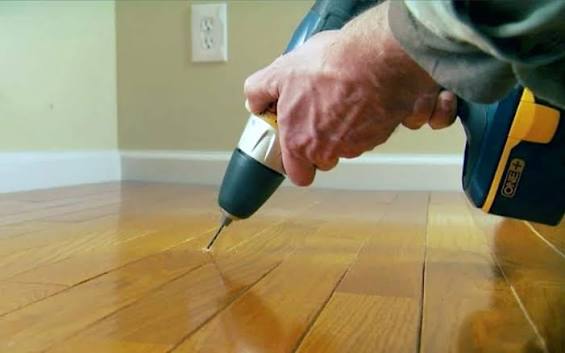
- Trim-head screws. Drive a thin screw through the board and into the joist, countersinking it slightly. Fill the hole with wood filler matched to your floor color.
- Squeak-fix kits. These include special screws that snap off below the surface, leaving a tiny hole that’s easy to hide.
- Finishing nails. Drive two nails at opposing angles into the board and set them below the surface. Fill with putty.
Use a stud finder to locate the joists so you’re not just driving into the subfloor.
Squeaks under carpet
If your squeak is under carpet, find a joist and drive a screw through the carpet and subfloor into the joist. Special screws made for this are designed to snap off cleanly. You can hide the spot with the carpet fibers.
Squeaky stairs
Stairs squeak for similar reasons. If you can reach the underside, add glue blocks or screws where treads meet risers. From above, drive finishing nails or screws through the tread into the riser, then fill and touch up.
Prevent future squeaks
- Keep indoor humidity steady, ideally around 30 to 50 percent.
- Use a humidifier or dehumidifier through seasonal swings.
- Don’t over-wet hardwood when cleaning.
- Check fasteners if you renovate nearby.
When it’s more than a squeak
A squeak is usually harmless. But if you notice sagging, bouncing floors, large gaps or cracks in walls, it could point to structural issues like a failing joist or moisture damage. In that case, call a structural engineer or experienced contractor.
If you rent
Check with your landlord before drilling into floors. A polite email describing the squeak and asking permission, or asking them to fix it, keeps you covered.
The takeaway
Start with the simplest fix, like powder, then move to screws or shims as needed. Within an afternoon you can turn that haunted-house floor into a peaceful one.