
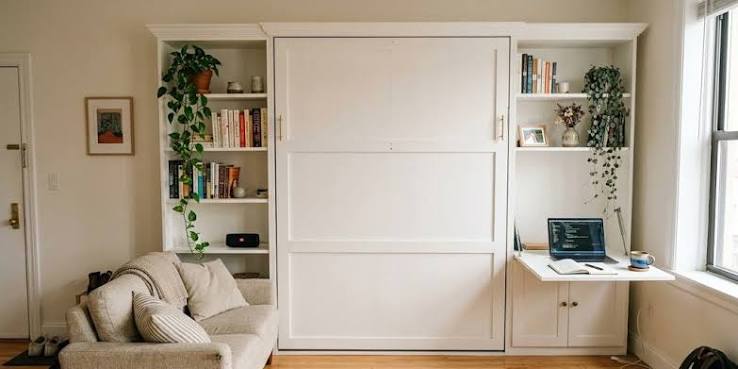
There’s a special kind of creativity that comes from living in a small apartment. You become an expert at stacking, folding and tucking things away. But there’s a difference between clever and chaotic, and the right furniture is what makes the difference.
Good small-space furniture does two things at once. It serves more than one purpose, and it keeps the room feeling open instead of crowded. Let’s look at pieces that really earn their place.
Start with the golden rule: fewer, better pieces
Before shopping, measure your room and sketch where things will go. Aim to leave clear walking paths of at least 30 inches wherever possible. Then ask, “What do I really use every day?” A small home can feel huge when it holds only things you need and love.
Sofa beds and sleeper sofas
If guests visit occasionally, a sofa bed lets your living room double as a guest room. Modern versions look much better than the lumpy fold-outs of the past. Look for ones with a supportive mattress and a mechanism that’s easy to open. Daybeds with trundles work well too.
Storage beds
The space under your bed is gold. Storage beds with drawers or a lift-up frame hold bedding, off-season clothes and shoes, freeing up closet space. Even adding bed risers and storage bins under a regular bed helps. Choose a frame with a low profile or a light headboard so the bedroom doesn’t feel heavy.
Nesting tables and lift-top coffee tables
Nesting tables stack neatly and pull apart when you need extra surfaces for guests. A lift-top coffee table rises up to become a work or dining surface, with hidden storage inside. This is a favorite for people working from home on a laptop.
Drop-leaf and extendable dining tables
A drop-leaf table folds down to a slim console and opens when friends come over. Extendable tables work the same way. Round tables with a single pedestal base are friendlier in tight spaces because there are no corners to bump and more room for chairs.
Wall-mounted solutions
When floor space is scarce, go vertical:
- Floating shelves hold books and plants without taking floor space
- Wall-mounted desks fold up when you’re finished working
- Murphy beds fold into the wall and free up the whole room by day
- Hooks and rails keep bags, coats and kitchen tools off counters
If you rent, ask your landlord before drilling, or use renter-friendly adhesive options for lighter items.
Ottomans and benches with storage
A storage ottoman can be a footrest, seat and hiding place for throws and remotes. Entryway benches with shoe cubbies keep clutter near the door under control. Pieces that hide mess are the unsung heroes of small homes.
Slim and leggy furniture
Furniture with exposed legs lets you see the floor beneath it, which tricks the eye into perceiving more room. Choose sofas, chairs and consoles with slim profiles and raised legs. Glass, acrylic and light-colored pieces also feel lighter than bulky dark ones.
Folding and stackable chairs
Chairs that fold flat or stack let you host without permanent clutter. Hang folding chairs on the wall as a simple decor feature, then pull them out when needed.
Use mirrors and light
A large mirror opposite a window bounces light around and makes the room feel deeper. Keep window treatments light and avoid blocking natural light with big furniture.
Watch the scale
Oversized sofas and giant rugs swallow small rooms. Look for apartment-sized furniture, such as a loveseat with a smaller depth. A rug large enough for the front legs of your sofa to sit on can anchor the area without overwhelming it.
Mistakes to avoid
- Buying furniture without measuring doorways and stairwells
- Filling every wall with something
- Choosing pieces that only do one job
- Ignoring vertical space
Final thought
Small spaces ask you to be intentional. Choose multitasking, light-looking pieces, keep surfaces clear and let walls and under-bed space do some of the work. You’ll be surprised how roomy a small place can feel.