
There’s nothing quite like standing in an inch of murky shower water, watching it go nowhere. Or doing the dishes while the sink fills with greasy soup. Clogged drains always seem to appear at the worst times, and the first instinct is often to grab a bottle of harsh drain cleaner.
But chemical cleaners can be hard on pipes, risky to your skin and eyes, and bad for the environment. They also don’t always work. The good news is that most clogs can be cleared with simple, safer methods. Here’s how.
Why drains clog
Understanding the cause helps you pick the right fix:
- Kitchen sinks: grease, food scraps and coffee grounds
- Bathroom sinks: hair, soap scum and toothpaste
- Showers and tubs: hair is the main culprit, mixed with soap
- Toilets: too much paper, wipes or foreign objects
Safety first
Never mix drain cleaners with other products, and avoid chemical cleaners if you plan to use a plunger or snake afterward, since splashing can burn skin. If you’ve already poured chemical cleaner in, tell anyone who might handle the drain, and wear gloves and eye protection.
Method 1: Boiling water (for grease and soap)
Boil a kettle of water and pour it slowly down the drain in two or three stages, waiting a few seconds between pours. This can melt grease and loosen soap buildup. Don’t use boiling water on porcelain fixtures, which can crack, or if you have PVC pipes that could soften with repeated very hot water. Very hot tap water is a safer alternative in those cases.
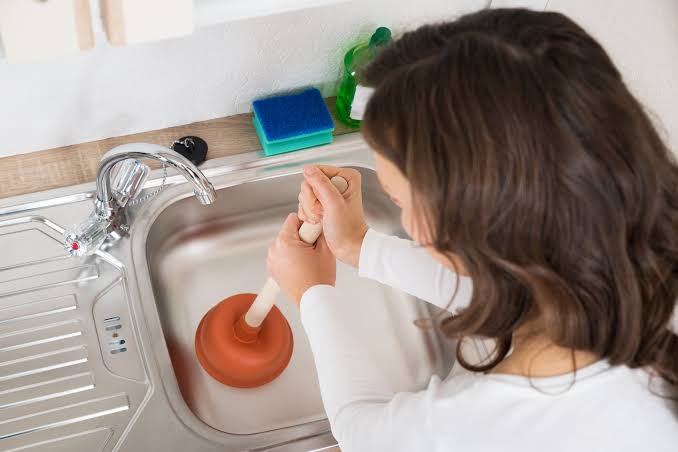
Method 2: Plunger
A plunger is the most reliable tool you can own.
- Remove any standing water or add enough to cover the plunger cup.
- If it’s a sink with an overflow hole, block it with a wet cloth.
- Place the plunger over the drain to form a tight seal.
- Push and pull firmly 15 to 20 times without breaking the seal.
- Pull away sharply and check if the water drains.
Use a flat cup plunger for sinks and tubs, and a flange plunger for toilets.
Method 3: Baking soda and vinegar
This popular combination can help with minor clogs and odors, though it’s not a miracle worker.
- Pour half a cup of baking soda down the drain.
- Follow with half a cup of white vinegar.
- Cover the drain and let it fizz for 15 to 30 minutes.
- Flush with hot water.
It works best as a maintenance treatment, not for severe blockages.
Method 4: Remove the hair by hand (shower and tub)
Unscrew or pop out the drain cover. Use a plastic drain-cleaning tool, a bent wire hanger with small hooks or a pair of tweezers to pull out the hair clog. It’s not pleasant, but it’s incredibly effective. Wear gloves.
Method 5: Drain snake or auger
For deeper clogs, a drain snake can reach what plungers can’t.
- Feed the end of the snake into the drain.
- Turn the handle and push gently until you feel resistance.
- Rotate to break up or hook the clog.
- Slowly pull the snake out, cleaning off debris.
- Run hot water to flush the line.
Inexpensive plastic snakes work well for hair clogs, and metal ones handle tougher blockages. Be gentle to avoid scratching the pipe.
Method 6: Clean the P-trap
Under most sinks is a curved pipe called a P-trap. It catches debris, and it’s a common clog spot.
- Place a bucket under the trap.
- Loosen the slip nuts by hand or with pliers.
- Remove the trap and empty it.
- Clean the inside, and reinstall carefully.
- Run water to check for leaks.
It takes about ten minutes and can fix many stubborn sink clogs.
Method 7: Wet/dry vacuum
Some people use a wet/dry vacuum on its liquid setting to pull clogs out. Seal around the drain with a cloth and let the suction do the work. It’s useful for stubborn shower or tub clogs.
Prevent future clogs
- Use drain strainers in sinks, showers and tubs
- Never pour grease down the drain. Let it cool and throw it away
- Scrape plates before washing
- Flush a drain with hot water weekly
- Don’t flush wipes, even “flushable” ones
- Clean strainers and stoppers regularly
When to call a plumber
Call a professional if:
- Several drains clog at the same time
- You hear gurgling from other fixtures or smell sewage
- Water backs up in the toilet or floor drain
- Nothing you try works
These signs may point to a main line problem, such as tree roots or a broken pipe. If you rent, report it to your landlord instead of paying for a plumber yourself.
Final thoughts
Most clogs aren’t emergencies. A few simple tools and a little patience can clear them without chemicals. Start with the gentlest method and work your way up.