
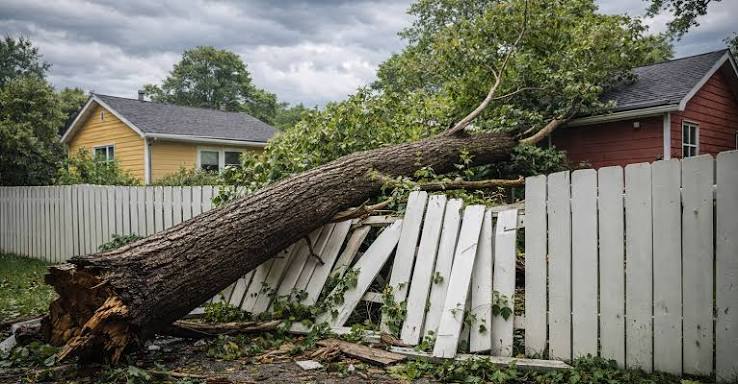
It’s the sound that makes your stomach drop. After a heavy storm, you step outside and find a huge branch, or an entire tree, lying across your yard. Your fence is crushed, or worse, your roof has a hole. And the tree clearly came from next door.
Who pays for the damage? It’s one of the most common neighbor disputes, and the answer isn’t always what people expect. Let’s make it simple.
The general rule: it depends on why the tree fell
In many places, the key question is whether the tree fell because of a natural event or because of negligence.
Healthy tree, storm or “act of nature.” If a perfectly healthy tree is knocked over by a hurricane, lightning or high winds, the tree owner is typically not liable. These are considered unavoidable events. In that case, your own homeowner’s insurance usually covers damage to your property.
Dead, diseased or neglected tree. If the tree was visibly dying, rotting or leaning dangerously, and the owner knew or should have known, they may be responsible. Courts often look at whether a reasonable person would have recognized the danger and taken action.
This is why evidence about the tree’s condition can matter a great deal.
Step 1: Make everything safe
If the tree has hit your house, power lines or anything dangerous, stay away and call emergency services or the utility company. Safety comes first. If it’s safe, take steps to prevent further damage, such as covering a damaged roof with a tarp. Keep receipts, because insurers often reimburse reasonable emergency repairs.
Step 2: Document the damage
Take lots of photos and video of:
- The fallen tree, including the trunk, stump and roots
- Any signs of rot, fungus, hollow areas or dead branches
- All damaged property
- The surrounding area and the weather conditions
If you had previous photos of the tree looking unhealthy, save them. Notes, emails or messages in which you warned the neighbor are valuable too.
Step 3: Contact your insurance company
Call your own insurer promptly, even if you think the neighbor should pay. In many cases, your homeowner’s policy covers the damage and then your insurer may pursue the neighbor’s insurance if negligence was involved. Ask about your deductible and what’s covered, including tree removal. Policies differ, and some have limits on debris removal.
Step 4: Talk to your neighbor
Try to keep it friendly. Your neighbor is probably as stressed as you are. Let them know what happened, share the photos and ask them to notify their insurer. A calm conversation often solves more than a heated one.
Follow up in writing. A short email summarizing what you discussed creates a helpful record.
What if the neighbor ignored warning signs?
If you previously warned your neighbor that a tree was dying and they did nothing, send that history to your insurer and consider consulting an attorney. Their failure to act can make them responsible. A certified arborist’s report describing the tree’s condition can be strong evidence.
What about overhanging branches and roots?
Rules vary, but a common principle is that you can trim branches and roots that cross onto your property up to the property line, as long as you don’t harm the tree’s health or cause it to become unstable. Cutting too aggressively could make you liable if the tree later falls. When in doubt, talk to your neighbor or hire a licensed arborist.
If a branch is already damaging your property or posing a clear danger, notify the owner in writing and keep a copy.
Who removes the tree?
Often, the tree’s owner is responsible for removing the portion of the tree on their own land. If a tree falls onto your yard, though, your insurance may help with removal, particularly if it damaged a covered structure. Ask your insurer before hiring anyone.
When to get legal help
Consider speaking with a local attorney if:
- The damage is substantial
- The neighbor denies responsibility despite clear negligence
- Insurance companies dispute the claim
- You’ve received warnings or notices from local authorities
Small claims court may be an option for lower-value disputes.
Prevent trouble before it starts
- Walk your property after storms and look for dead limbs
- Have trees inspected, particularly large ones near buildings
- Keep a friendly line of communication with neighbors
Final thoughts
When a neighbor’s tree falls on your property, who pays often depends on whether the fall was unavoidable or preventable. Stay safe, document everything, call your insurer and keep things civil. Good records and good manners will carry you a long way.