
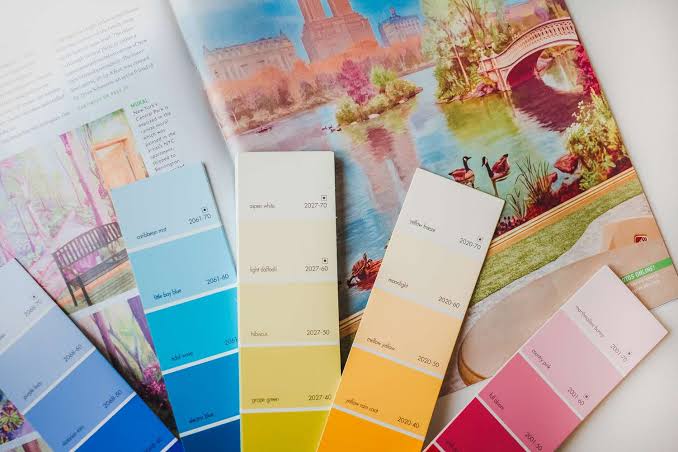
You fall in love with a soft gray swatch at the paint store. It’s calm, elegant and just what you imagined. Then it goes on your living room wall and, suddenly, it looks blue, or purple, or strangely flat. What happened?
The answer is almost always light. Paint doesn’t have a fixed color. It changes with the light in your room, the time of day and even the colors around it. Once you understand this, choosing paint gets much easier, and far less stressful.
Why light changes everything
Color is really the way our eyes read light bouncing off a surface. If the light changes, the color changes too. Natural daylight shifts from cool in the morning to warm and golden in the evening. Artificial bulbs add their own tint: warm bulbs push colors toward yellow, while cool bulbs push them toward blue.
That’s why a paint chip under store fluorescents can look nothing like it does on your wall.
Know which direction your room faces
The direction of your windows is a great clue to how a room will feel. In the northern hemisphere:
- North-facing rooms get cooler, softer, indirect light. Colors can look darker and bluer. Warm tones such as creamy whites, soft beiges, warm grays and earthy greens help balance the chill. Pale, cool colors can feel gloomy here.
- South-facing rooms get bright, warm light all day. They handle almost any color well. Cool shades like soft blues and greens can look fresh and balanced, while very warm colors can feel intense.
- East-facing rooms glow warm in the morning and turn cooler later. Choose colors that look pleasant in both lights, such as soft neutrals.
- West-facing rooms are dim in the morning and glow orange in the evening. Colors can look much warmer at sunset, so be careful with reds and oranges.
(In the southern hemisphere, north and south are reversed.)
Consider the size of the room
Light colors reflect more light and can make a small room feel bigger. But dark colors aren’t forbidden. In a small room, a deep color can feel cozy and dramatic, like a jewel box. Just make sure the lighting is good, and commit to the look, because half-hearted dark paint can feel muddy.
Understand undertones
Every color has an undertone, a subtle hint of another color underneath. A gray might lean blue, green, purple or beige. A white might lean warm (yellow, pink) or cool (blue, gray). Undertones are the reason colors can clash with your flooring, furniture or countertops.
A simple tip: compare your sample next to a pure white sheet of paper. The undertone will show up more clearly.
Always test samples
This is the single most important step. Skip the tiny chips and buy sample pots, or use peel-and-stick sample sheets.
- Paint a large patch, about two feet by two feet, or paint a poster board.
- Put it on at least two walls, since light differs across the room.
- Look at it at different times of day: morning, afternoon and evening.
- View it under your artificial lighting at night.
- Live with it for a few days before deciding.
If you use poster board, you can move it around the room and even take it into closets and corners.
Think about your lightbulbs
Bulbs are measured in Kelvin. Around 2700K to 3000K is warm and cozy, 3500K to 4100K is neutral, and 5000K and above is cool daylight. Warm bulbs enhance reds and yellows. Cool bulbs enhance blues and grays. Choose bulbs that match the mood you want and keep them consistent throughout the room.
Don’t forget your finish
Paint finish affects how light behaves:
- Matte or flat hides wall imperfections but is harder to clean.
- Eggshell or satin has a soft glow and is a favorite for living areas and bedrooms.
- Semi-gloss reflects more light and is durable, which works well for trim, doors and kitchens.
Shinier paints reflect more light and can make colors appear slightly different.
Consider what’s already in the room
Floors, cabinets, countertops and large furniture are hard to change, so match your paint to them. A beige wall may look too yellow beside a pink-toned wood floor. A cool gray can clash with warm oak. Hold samples next to fixed elements to check.
Keep a cohesive flow
If your home has open spaces, choose colors that relate to one another. You don’t need to use the same color everywhere, but a consistent palette in similar undertones helps spaces feel connected.
If you rent
Check the lease before painting. Some landlords allow it with approval and a promise to repaint when you leave. Ask in writing.
Final thoughts
Great paint color isn’t about finding the perfect swatch in the store. It’s about seeing how that color behaves in your light. Test, watch and be patient. When you finally find the right shade, you’ll know.