
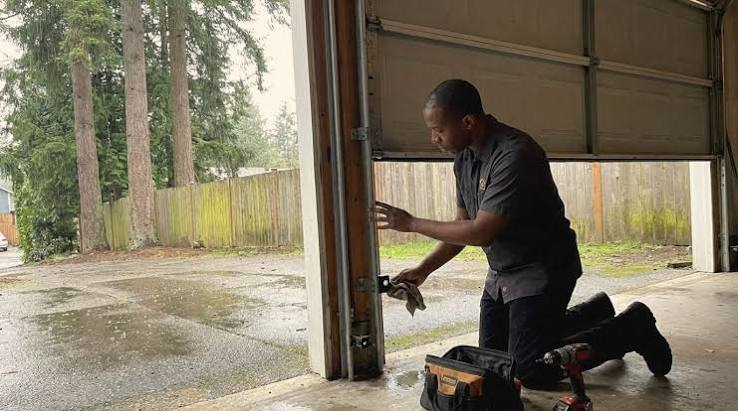
It’s the end of a long day. You press the button, the garage door starts to come down, then pauses and shoots right back up. You try again. Same thing. Now you’re sitting in your driveway wondering if you’ll have to leave the door open all night.
The good news is that most garage doors that won’t close have a simple cause, and several can be fixed in a few minutes with no special tools. Here’s what to check, starting with the easiest.
1. Check the safety sensors
This is the most common culprit. Near the bottom of the door tracks, on each side, you’ll see two small devices facing each other. They send an invisible beam across the doorway. If something interrupts it, the door reverses, which is a safety feature to prevent injury.
If the door won’t close:
- Look for blinking or dim indicator lights on the sensors. A steady light on both usually means they’re aligned.
- Wipe the lenses with a soft cloth. Dust, spider webs and dirt can block the beam.
- Make sure nothing is in the way, such as a bag, a bike tire or a storage box.
- Gently adjust the sensors so they’re pointing directly at each other. They can get bumped out of alignment.
This one fix solves a surprising number of problems.
2. Check the remote and wall button
Try the wall-mounted button as well as the remote. If the door works from the wall but not the remote, the issue is likely the remote battery or programming. Replace the battery and reprogram if necessary. If the wall button is unresponsive, the wiring may be loose.
Also, look for a “lock” button on the wall panel. If it’s engaged, it can disable the remote controls.
3. Inspect the tracks
Look along both metal tracks. Dents, bends, debris or buildup can block the rollers. Clean the tracks with a cloth and remove any obstructions. Make sure the tracks are lined up and the mounting bolts are tight. Don’t try to hammer major bends out yourself. A bent track can be dangerous and may need professional repair.
4. Lubricate moving parts
Stiff rollers, hinges and springs can cause the door to struggle. Spray a garage door lubricant or silicone-based spray on the rollers, hinges and springs. Avoid using too much, and don’t use thick grease on the tracks, which can attract dirt.
5. Test the door’s balance
Pull the red emergency release cord to disengage the opener, then lift the door by hand halfway. A balanced door should stay in place. If it slams down or flies up, the springs may be worn or broken.
Important safety note: Garage door springs hold extreme tension and can cause serious injuries. Do not adjust or replace them yourself. Call a professional.
6. Check the close-force and limit settings
Most openers have limit and force adjustment settings, typically small dials or buttons on the motor unit. If the limit for “down” travel is set incorrectly, the door may think it hit an obstacle and reverse before reaching the floor. Check your owner’s manual for instructions, and adjust in small steps, testing after each change.
7. Look at the opener itself
If the motor hums but the door doesn’t move, the trolley or drive gear may be worn. If there’s no sound at all, check that the opener is plugged in, the outlet works and the circuit breaker hasn’t tripped.
8. Test the reversal feature
Place a 2×4 board flat on the floor under the door and close it. The door should reverse when it touches the board. This confirms the safety feature works correctly. If it doesn’t, stop using the automatic closer and get it serviced.
When to call a professional
Call a garage door technician if:
- You see broken springs or frayed cables
- The door is crooked or off the track
- The opener makes grinding noises
- Basic fixes don’t work
A little caution protects you and your family.
Prevent future problems
- Clean sensors and tracks a couple of times a year
- Lubricate moving parts every six months
- Test the safety reversal monthly
- Schedule a yearly inspection
Final thoughts
Before panicking or paying for a service call, check the sensors, clear the tracks and look at your remote. Many stubborn garage doors just need a quick wipe and a small nudge.